
NYC · Long Island · Westchester · Albany · Buffalo · Rochester · Syracuse

Biomedical equipment service for New York's hospitals and health systems.

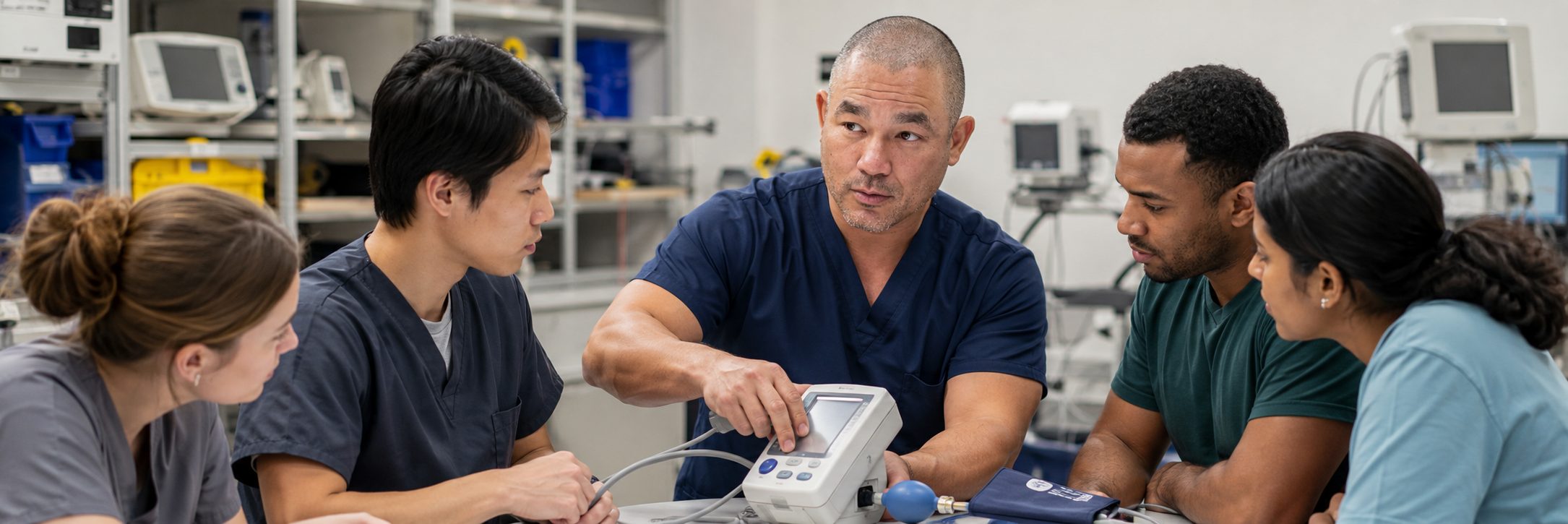
New York Biomedical is a biomedical engineering and medical-equipment service company serving hospitals, health systems, and clinics from New York City to upstate. We repair, calibrate, and preventively maintain every modality — biomedical, medical imaging, and scientific laboratory equipment — and provide electrical safety inspections and outsourced field service for device manufacturers.

19.5M
New York Population
24/7
Tech Support
NFPA 99
Certified Testing
All
Modalities

Service across New York

From Manhattan teaching hospitals to upstate regional centers, we service every modality — biomedical, medical imaging, and laboratory equipment — for facilities of every size, with compliance built to Joint Commission, NFPA 99, and FDA/SMDA standards.

Repair & Calibration

Biomedical, imaging, and lab equipment restored and calibrated to manufacturer spec — including Article 28 facility protocols.

Preventive Maintenance

PM schedules built for New York compliance and facility staffing models.

Isolated Power Testing

Annual NFPA 99 recertification of IPS and line isolation monitors statewide.

24-Hour Dispatch

From Manhattan to Buffalo. One number, every modality.

Surveyor-Ready Reports

Documentation aligned with Joint Commission, DOH, and CMS requirements.

Manufacturer Field Service

Outsourced, contracted field service and depot support for medical-device manufacturers across New York State.

Transparency for our clients

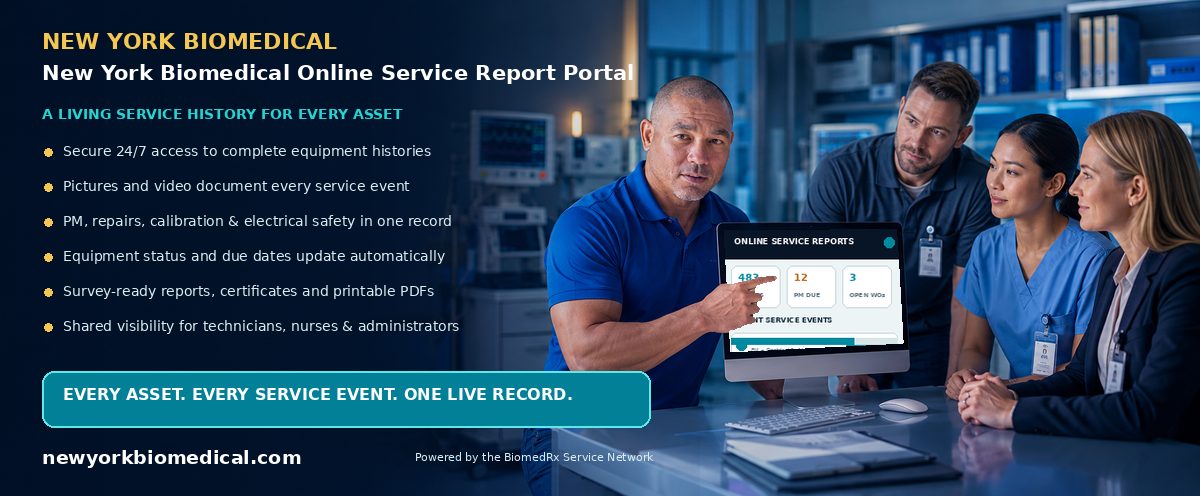
Online Service Reports

New York Biomedical and every member of the BiomedRx Service Network give clients a secure online service report portal — real-time access to every preventive-maintenance visit, repair, calibration, and compliance record for their equipment. Reports update automatically from the field, so documentation stays current and audit-ready.

View a Sample Report →
Online service report portal

News from New York

PFM compliance, Brooklyn cancer tower, and a defibrillator on the late F train.

Devin Lockett, biomedical technician, in Manhattan with the New York City skyline
Educational

Joint Commission Accreditation 360 Takes Effect: The Documented Maintenance Management Program Is Now Mandatory for New York Hospitals

The Joint Commission's 2026 Physical Environment (PE) standards, launched under its Accreditation 360 initiative and effective January 1, 2026, represent the most substantial rewrite of the Environment of Care and Life Safety requirements in nearly a decade. The accreditor consolidated the former EC and LS chapters into a single Physical Environment framework and, in the process, removed hundreds of individual requirements — reducing elements of performance by roughly half for hospitals and critical access hospitals alike.

The headline change for biomedical and facilities teams is that a documented Maintenance Management Program (MMP) is no longer merely a best practice — it is a mandatory, formalized framework. Under the new standards a hospital must be able to demonstrate defined preventive-maintenance frequencies, risk classifications for its equipment inventory, and competency verification for the staff performing the work. Surveyors are described as looking less for policy binders and more for timestamped, technician-signed evidence that the program is actually executing against those policies.

For New York hospitals, fewer line-item requirements does not mean less rigor. A leaner standard set concentrates scrutiny on whether the maintenance program produces complete, retrievable records tied to real intervals and qualified personnel. Facilities should confirm the exact standards, elements of performance, and effective dates directly with The Joint Commission rather than relying on secondhand summaries, since the program is still being interpreted in the field. The durable takeaway is unchanged: build the MMP as a living system of scheduling, competency, and evidence — not a document you produce the week before a survey.

Sources: The Joint Commission — News (2026); ASHE — Joint Commission Standards Updates

July 6, 20268 min read
Devin Lockett in Times Square, Manhattan
Informative

SUNY Downstate Advances Its $1.1B Brooklyn Campus Overhaul as New York's Health-Facility Building Wave Continues

New York State has cleared an early step in SUNY Downstate Health Sciences University's roughly $1.1 billion Brooklyn campus overhaul, approving demolition of a condemned parking structure to make way for a new hospital annex and ambulatory surgery center focused on cardiology and oncology. The project, supported by substantial state capital funding, is part of a broader New York City health-construction wave that also includes the long-planned Lenox Hill Hospital redevelopment on Manhattan's Upper East Side.

Campus overhauls and new surgical space are major biomedical undertakings. Ambulatory surgery centers and cardiac and oncology suites are dense with high-acuity equipment — imaging, monitors, anesthesia units, and infusion systems — each of which must be received, acceptance-tested, entered into the equipment management program, and scheduled for preventive maintenance before clinical use. New construction also brings NFPA 99-governed medical-gas, electrical-safety, and where applicable isolated-power verification into scope from commissioning onward.

For New York HTM teams, projects at this scale are planning signals well ahead of opening: commissioning support, spare-parts strategy, and technician familiarization for newer modalities ramp early. Specifics such as service lines, square footage, and timelines should be confirmed with SUNY Downstate and the New York State Department of Health, since large projects are revised as they advance through approval and construction.

Sources: New York State Dept. of Health — Health Facilities; SUNY Downstate Health Sciences University

July 7, 20266 min read
Devin Lockett in Manhattan with the Empire State Building
Field Notes

The Defibrillator We Verified Between Rounds in a Manhattan Corridor

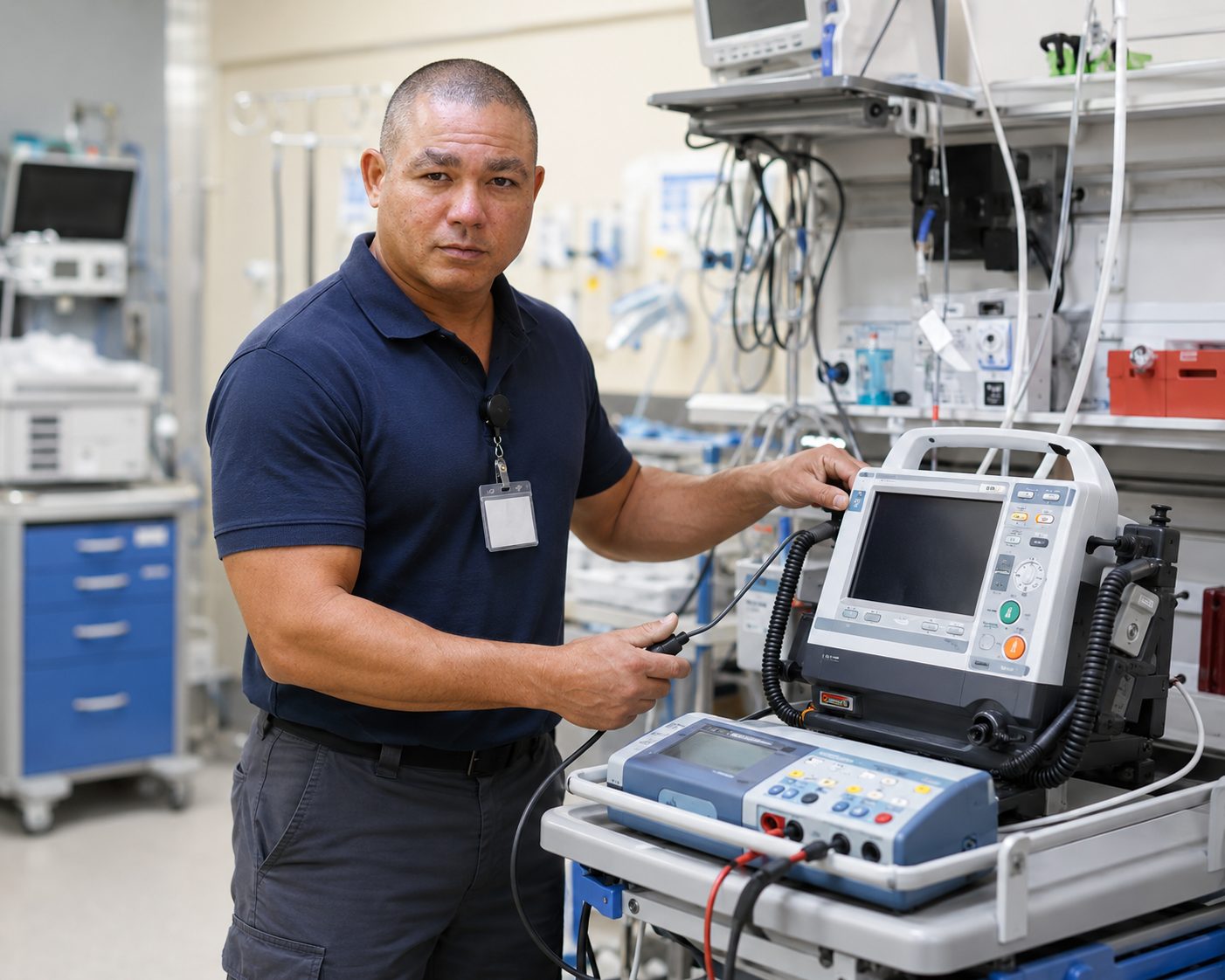
Field service in New York City is a logistics puzzle before it is an engineering one. Getting to a defibrillator that failed its readiness check can mean freight elevators, badge access, and a repair performed in a corridor between clinical rounds. None of that changes the standard: an automated external or manual defibrillator has to be returned to the manufacturer's performance specifications and documented before it goes back on the wall, because this is a device a code team stakes a life on.

Verifying a defibrillator is not a power-on test. Confirming energy delivery against specification with a calibrated analyzer, checking pads, cables, and battery condition, and recording the result are what separate a device that looks ready from one that is. A defibrillator that fails verification comes out of service immediately, whatever the pressure of a crowded schedule.

The broader lesson for New York facilities is that responsive field service and uncompromising verification belong together. The goal on every call — however tight the corridor or the timeline — is to return life-safety equipment to service quickly, with a record that proves it is genuinely ready.

Sources: FDA — Automated External Defibrillators; The Joint Commission — Standards

July 8, 20264 min read

Let's keep your equipment online.

Tell us your facility, equipment, and city. We respond within one business hour during normal hours.

The 2026 compliance landscape

What the newest edition of the Health Care Facilities Code means for New York hospitals — and how documentation-first maintenance keeps you survey-ready.

The 2026 edition of NFPA 99, the Health Care Facilities Code, sharpens the requirements New York facilities are measured against. Category 1 piped medical gas systems — oxygen, medical air, medical vacuum, and nitrous oxide — carry defined inspection frequencies and documentation standards under Chapters 5 and 6, and isolated power panels in wet procedure and surgical locations remain subject to their own testing and record-keeping obligations. Surveyors routinely request twelve months of maintenance history for Category 1 and Category 2 systems, and gaps in that record can produce citations regardless of the actual condition of the equipment at the time of survey.

That reality reframes what good service looks like. New York Biomedical builds preventive-maintenance and isolated-power testing programs around the record as much as the repair — surveyor-ready reports aligned with Joint Commission, NYSDOH, and CMS expectations, so your team can produce a complete, defensible history on demand rather than reconstructing it under an inspector's deadline.

Free Guide · PDF

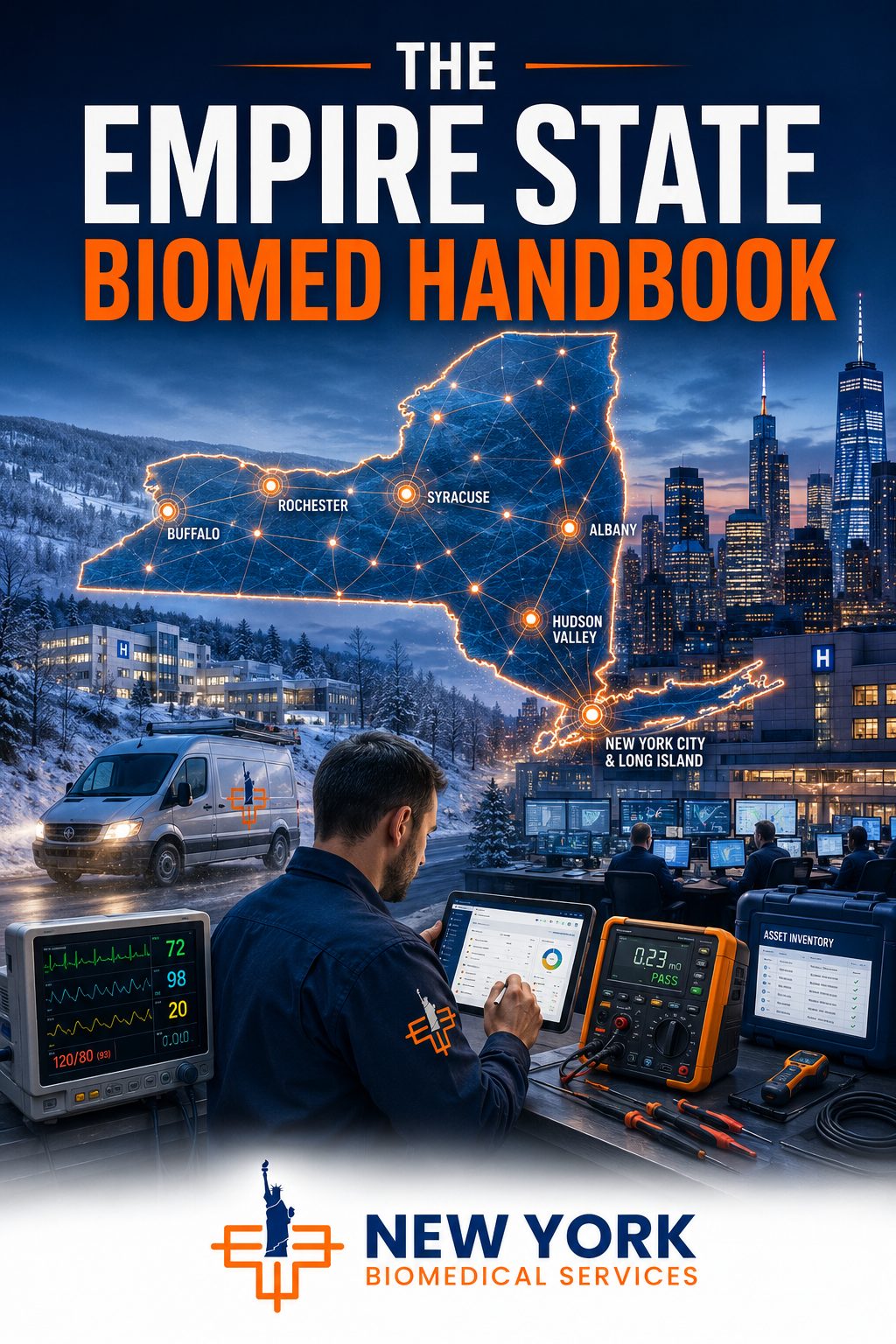
The Empire State Biomed Handbook

Download our free illustrated guide — practical, current, and written for 2026.

↓ Download the eBook
Electrical Safety

Isolated Power System Inspection & Recertification

Isolated power systems (IPS) and their line isolation monitors (LIMs) protect operating rooms, ICUs, and other wet procedure locations from ground faults and electrical shock. New York Biomedical inspects, tests, and recertifies isolated power panels and LIMs to NFPA 99 and NEC Article 517 — verifying monitor accuracy, measuring total hazard current, testing alarms and reference points, checking receptacles and grounding, and delivering the documentation your facility needs for Joint Commission, CMS, and DNV accreditation. Scheduled annually or after any change, our recertification keeps your critical-care spaces compliant and your people protected.

Isolated Power System Testing & FAQ →
The BiomedRx Network

Our Family of HTM Companies

The BiomedRx Network unites regional and specialty healthcare technology management companies—preventive maintenance, repair, calibration, electrical safety, and isolated power testing—under one trusted standard.

BR
BiomedRx
Flagship · National HTM
BN
BiomedRx Network
Field-Service Network
BF
BiomedRx Federal
Federal · VA / DoD
AB
Aloha Biomedical
Hawaii
AZ
Arizona Biomedical Services
Arizona
CA
California Biomedical Services
California
CH
Chicago Biomedical Services
Chicago, IL
CO
Colorado Biomedical Services
Colorado
ID
Idaho Biomedical Services
Idaho
IL
Illinois Biomedical Services
Illinois
LA
Louisiana Biomedical Services
Louisiana
NV
Nevada Biomedical Services
Nevada
NM
New Mexico Biomedical Services
New Mexico
You are here
NY
New York Biomedical
New York
OR
Oregon Biomedical Services
Oregon
TX
Texas Biomedical Services
Texas
UT
Utah Biomedical Services
Utah
WA
Washington Biomedical Services
Washington
WY
Wyoming Biomedical Services
Wyoming
AN
Anesthesia Equipment Maintenance
Specialty · Anesthesia
DC
Dialysis Center Maintenance
Specialty · Dialysis
IP
Isolated Power System
Specialty · IPS / LIM
MF
Medical Field Service
Specialty · OEM Field Service
MI
Medical Imaging Equipment Maintenance
Specialty · Imaging
SC
Surgery Center Maintenance
Specialty · ASC
IN
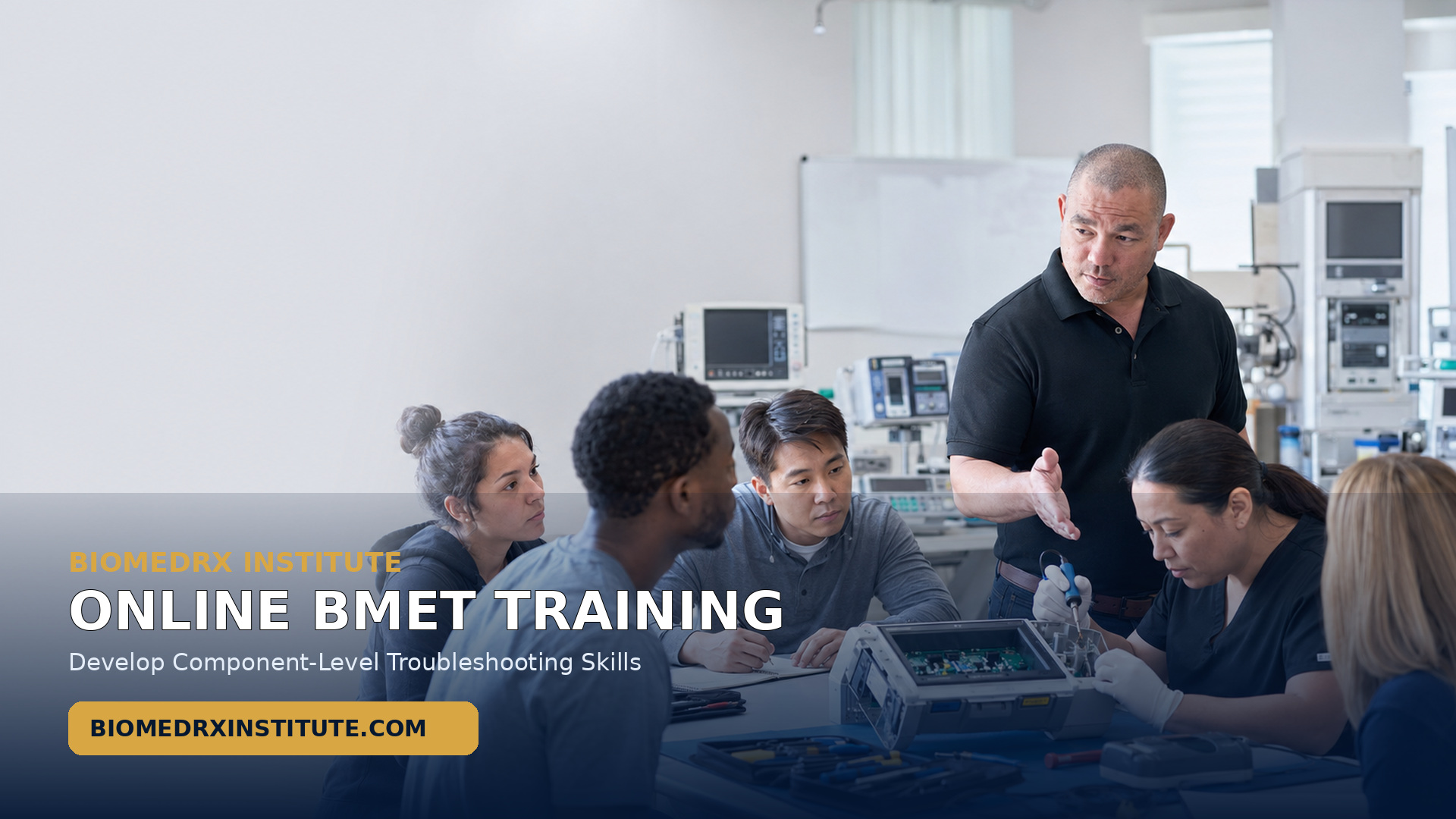
BiomedRx Institute
Training & Certification
TE
BiomedRx Technology
HealthTech / Software
Why Work With Us

The New York Biomedical difference

We combine real expertise with genuine care — and we make it easy to say yes. Here is what you can expect when you work with New York Biomedical.

Why work with us

Uptime you can trust

Documented preventive maintenance and rapid corrective repair keep critical equipment running and patients safe.

Survey-ready compliance

Every service is documented to Joint Commission, CMS, and NFPA 99 standards, so you are always inspection-ready.

Certified expertise

Certified biomedical technicians who know your equipment inside and out — no learning curve, no downtime.

One partner, full coverage

PM, calibration, electrical-safety testing, and IPS recertification under a single accountable contract.

FAQ

Frequently Asked Questions

What biomedical equipment services does New York Biomedical provide?
We provide preventive maintenance, corrective repair, calibration, electrical safety inspection, and isolated power system (IPS) testing for hospitals, surgery centers, and clinics.
Are your biomedical technicians certified?
Yes. Our BMETs are certified and our work follows Joint Commission, CMS, and NFPA 99 standards so your facility stays survey-ready.
How fast can you respond to an equipment failure?
We offer scheduled preventive maintenance plus priority on-call service to minimize downtime on critical medical equipment.
Do you help with regulatory compliance and documentation?
We do. Every service includes the documentation you need for Joint Commission, CMS, and NFPA 99 surveys.
How do I request service or a quote?
Call (424) 204-2382 or email info@newyorkbiomedical.com and our team will schedule an assessment.
Devin Lockett, Founder
About the Founder

Devin Lockett

Devin Lockett is the founder and entrepreneur behind this venture and the wider BiomedRx family of companies—spanning healthcare technology, wellness, media, and community initiatives. He builds brands focused on quality, service, and independent ownership.

More from Devin Lockett: devinlockett.com · devinlockett.tv · devinlockett.ai · 424-204-2382

Shop

Recommended on Amazon

As an Amazon Associate we earn from qualifying purchases. Prices and availability are accurate as of the date/time indicated and are subject to change.

Get cash back when you join Amazon Prime
View on Amazon →
Introduction to Medical Equipment Repair
View on Amazon →
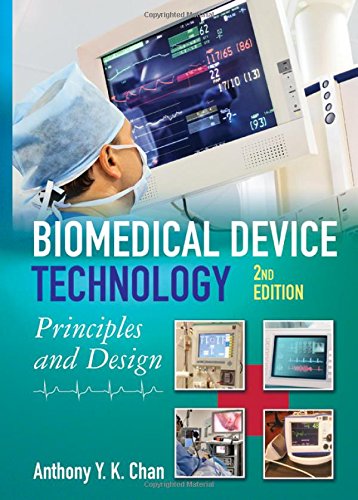
Biomedical Device Technology
View on Amazon →
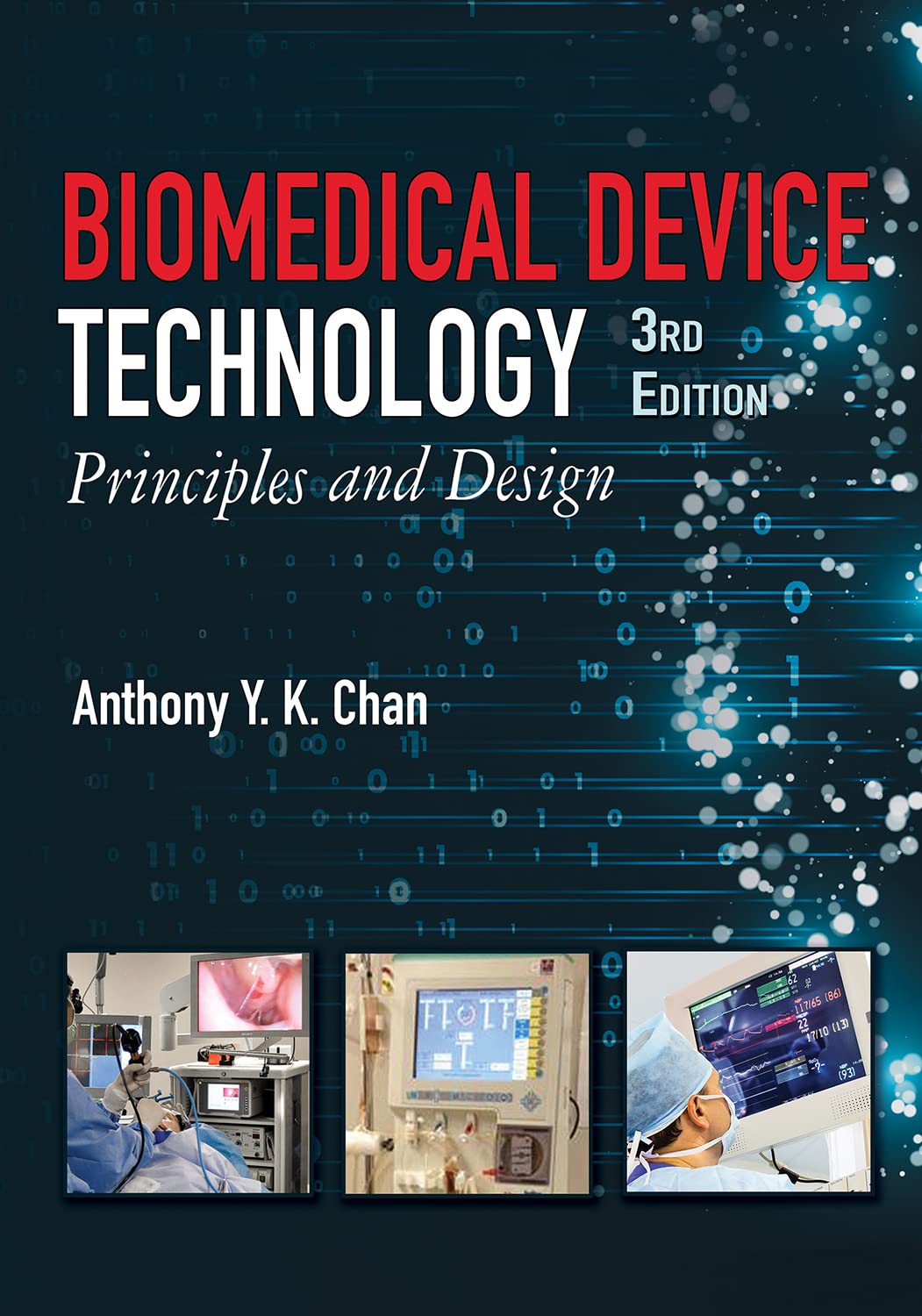
Biomedical Device Technology
View on Amazon →
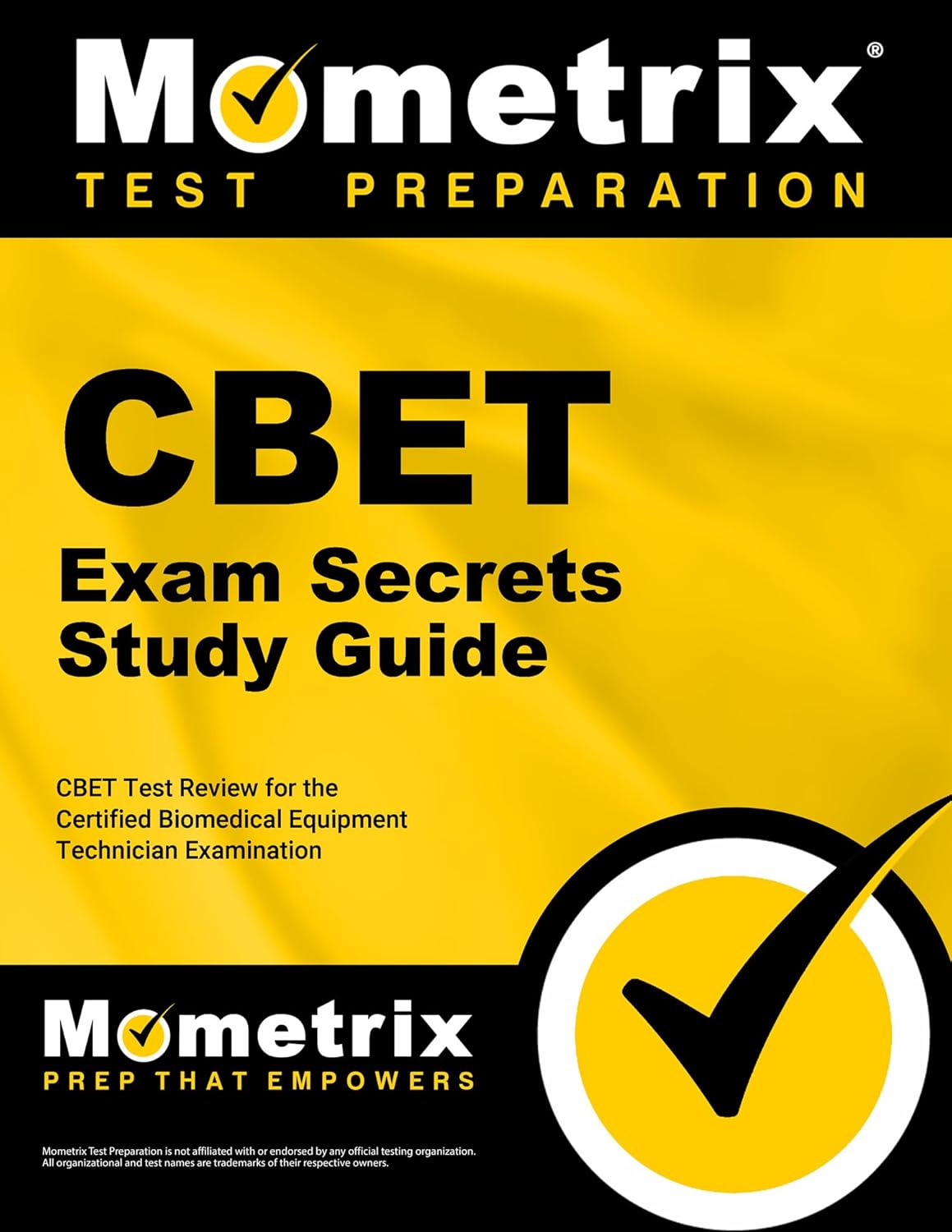
CBET Exam Study Guide
View on Amazon →
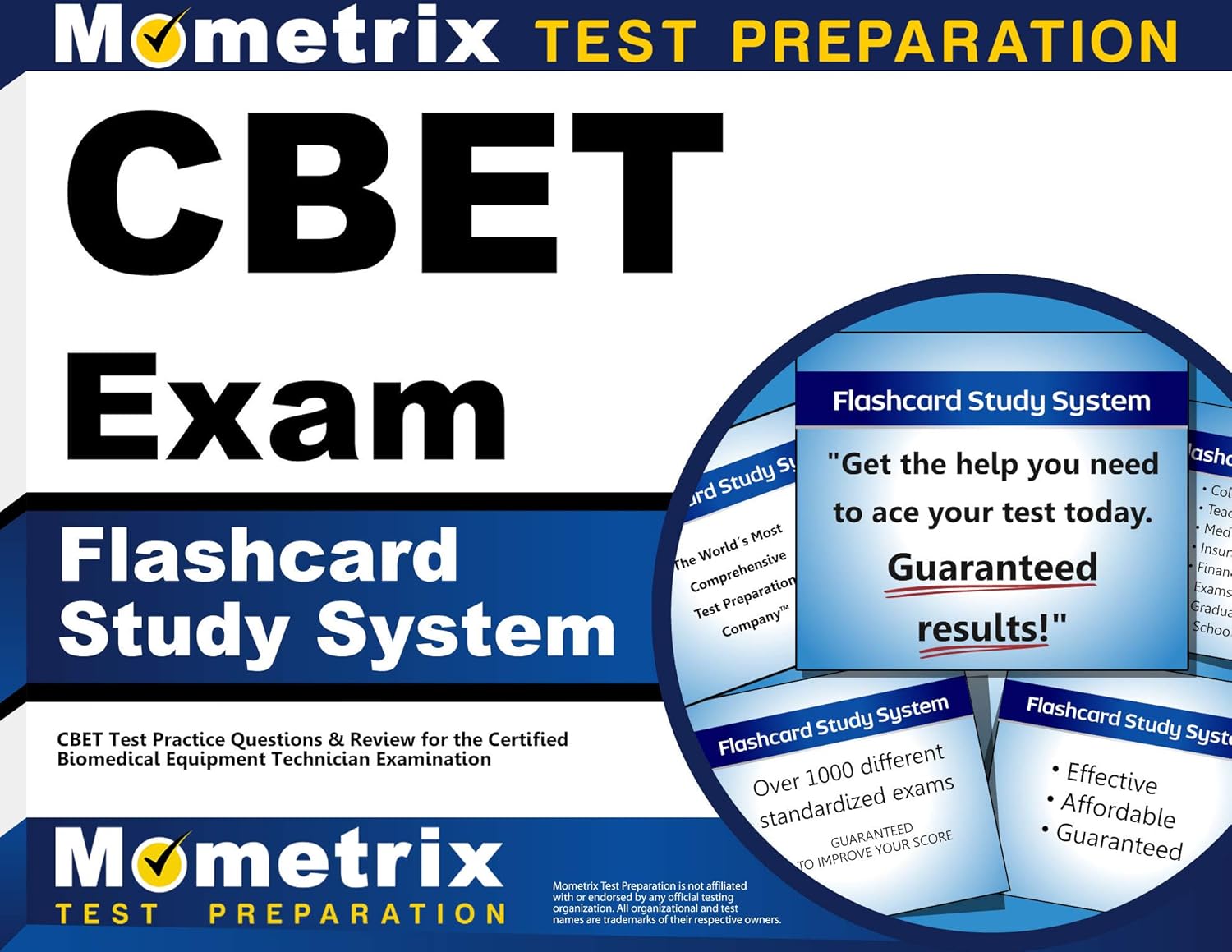
CBET Exam Flash Cards
View on Amazon →
Repair and Maintenance of Medical Devices
View on Amazon →
Biomedical Equipment Technician
View on Amazon →
Biomedical Equipment Maintenance and Safety
View on Amazon →
Medical Equipment Maintenance Management and Oversight
View on Amazon →
Introduction to Biomedical Engineering Technology
View on Amazon →
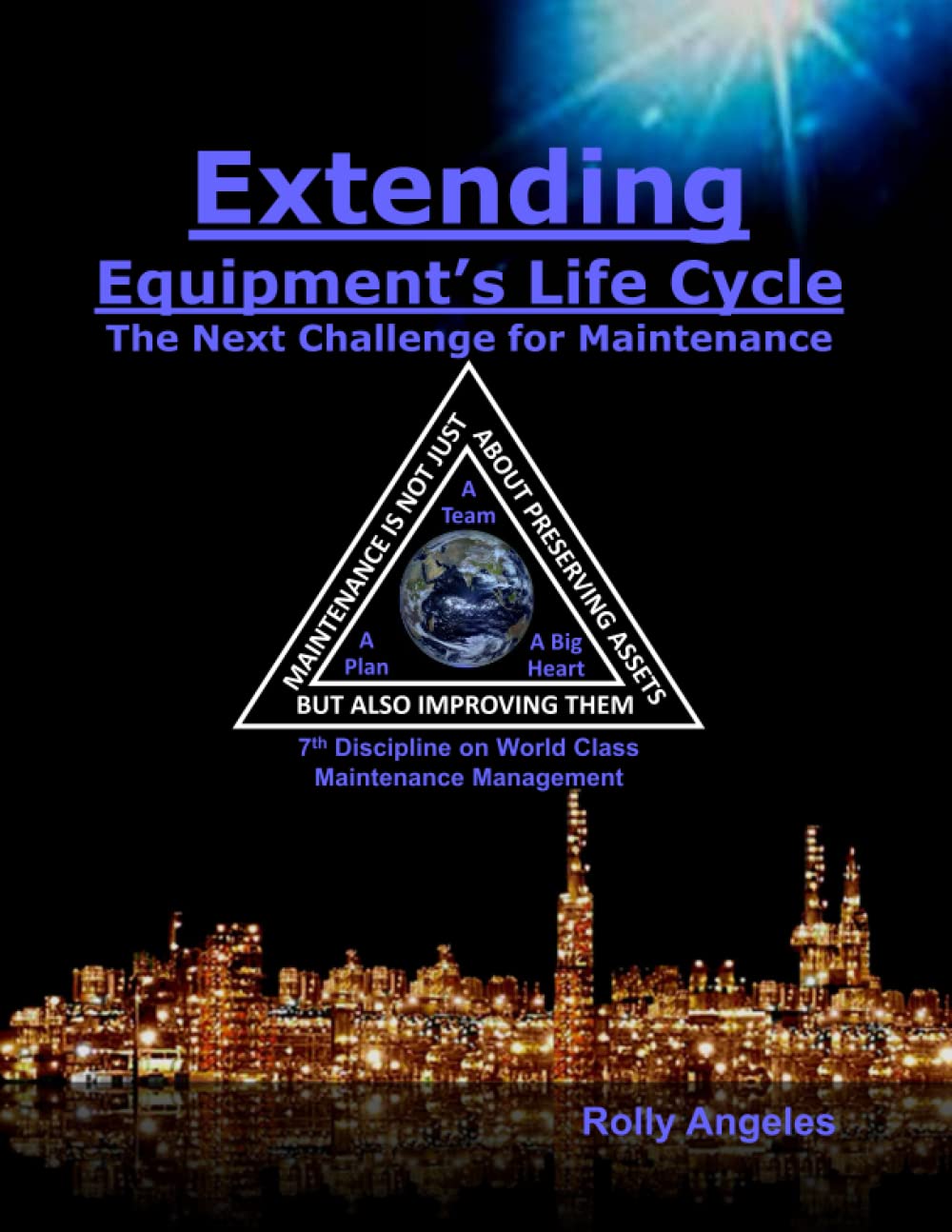
Extending Equipment's Life Cycle
View on Amazon →
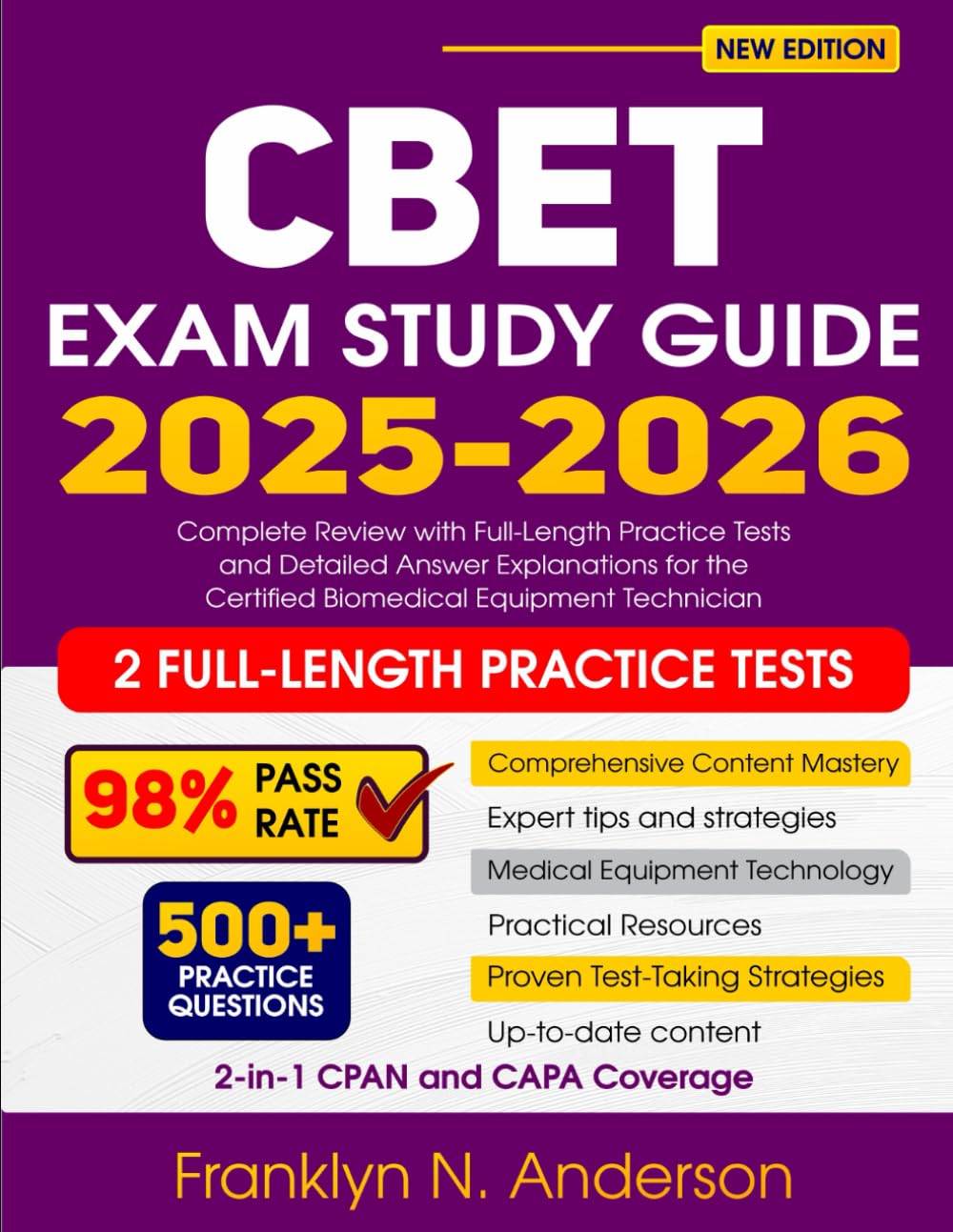
CBET Exam Study Guide 2025-2026
View on Amazon →
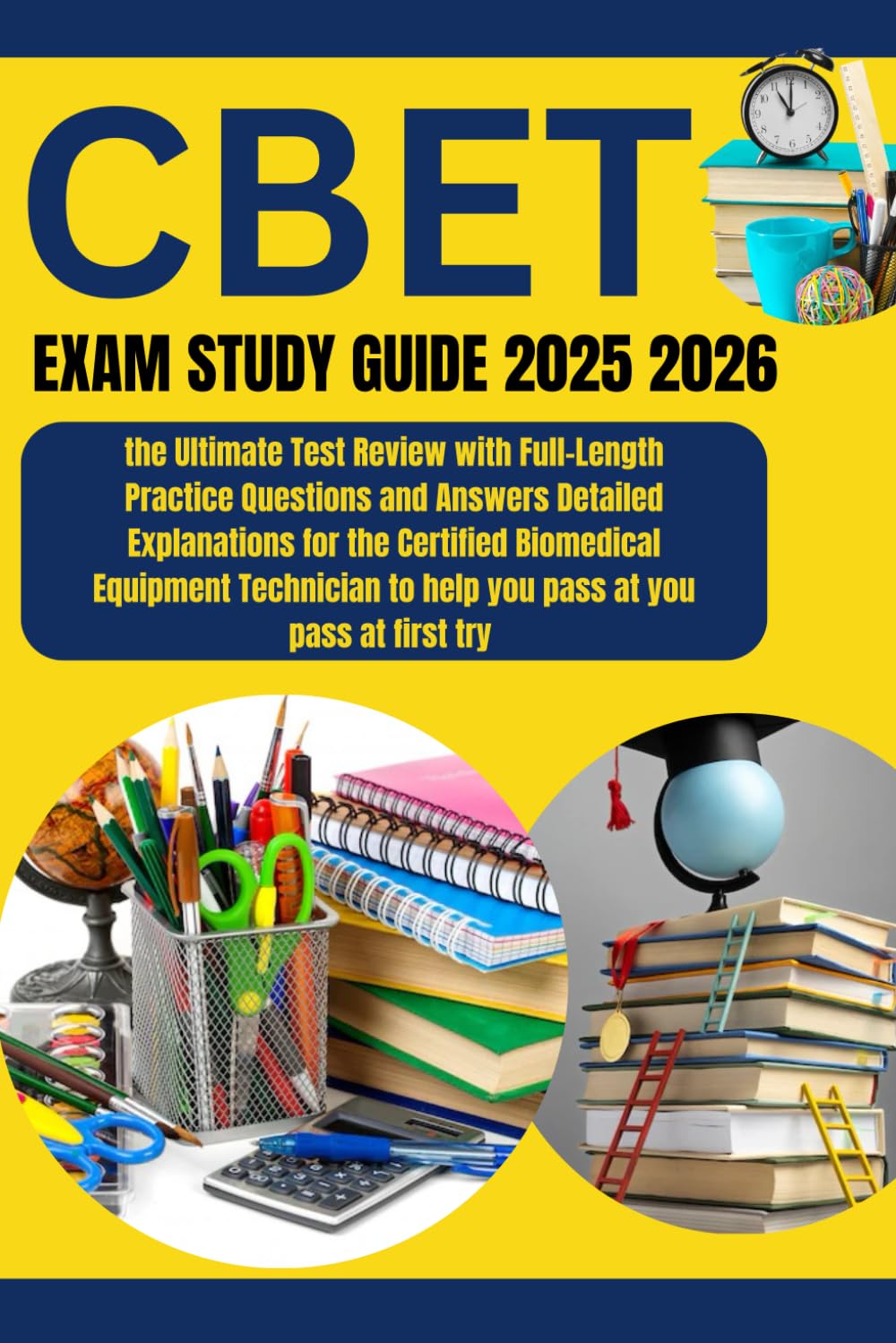
CBET Exam Study Guide 2025-2026
View on Amazon →
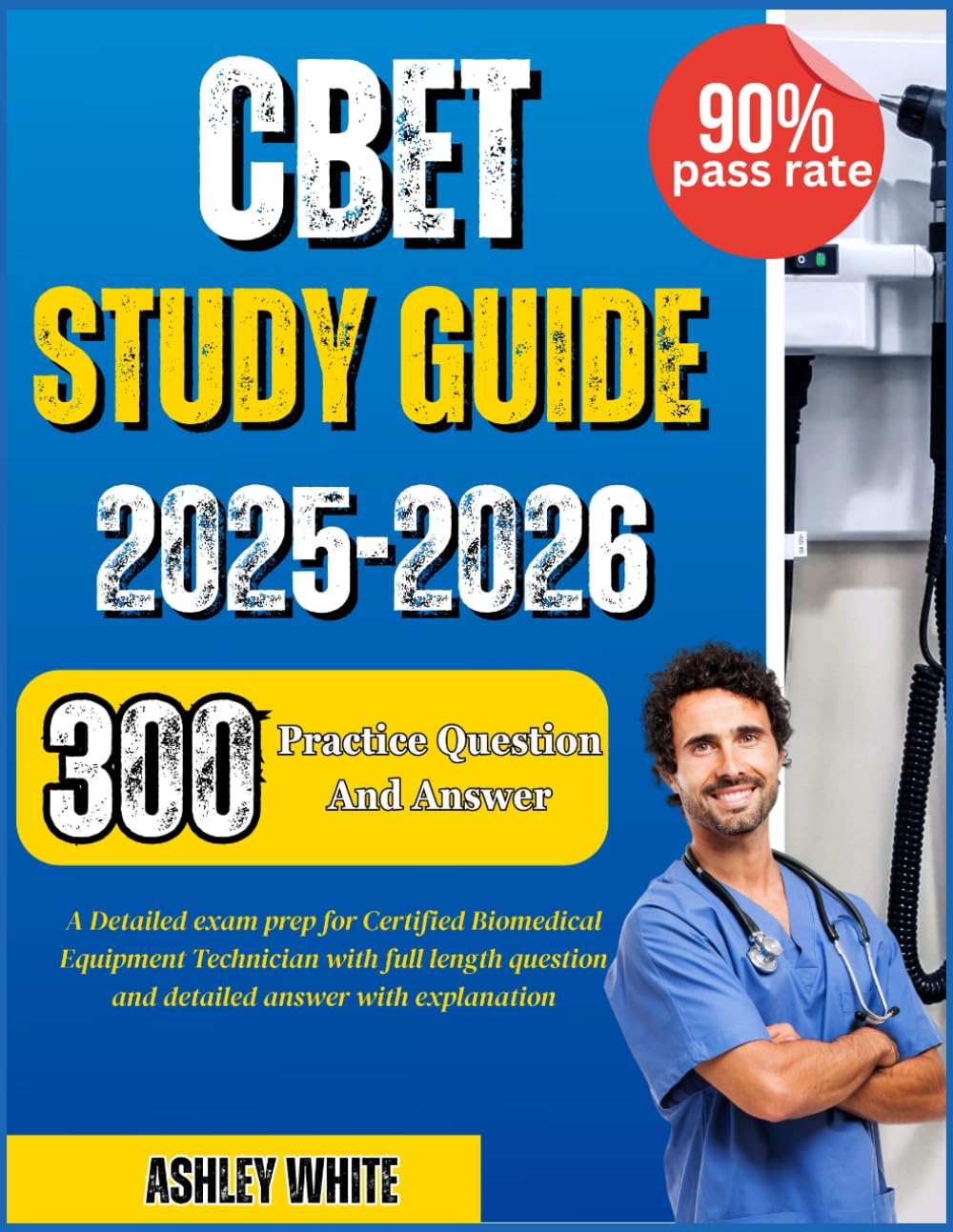
CBET Exam Study Guide 2025-2026
View on Amazon →
Careers as a Biomedical Equipment Maintenance Technician
View on Amazon →
CRES Exam Flash Cards
View on Amazon →
CRES Exam Study Guide 2025-2026
View on Amazon →
Introduction to Clinical Engineering
View on Amazon →
Biomedical Engineering Fundamentals
View on Amazon →
Clinical Engineering Handbook
View on Amazon →
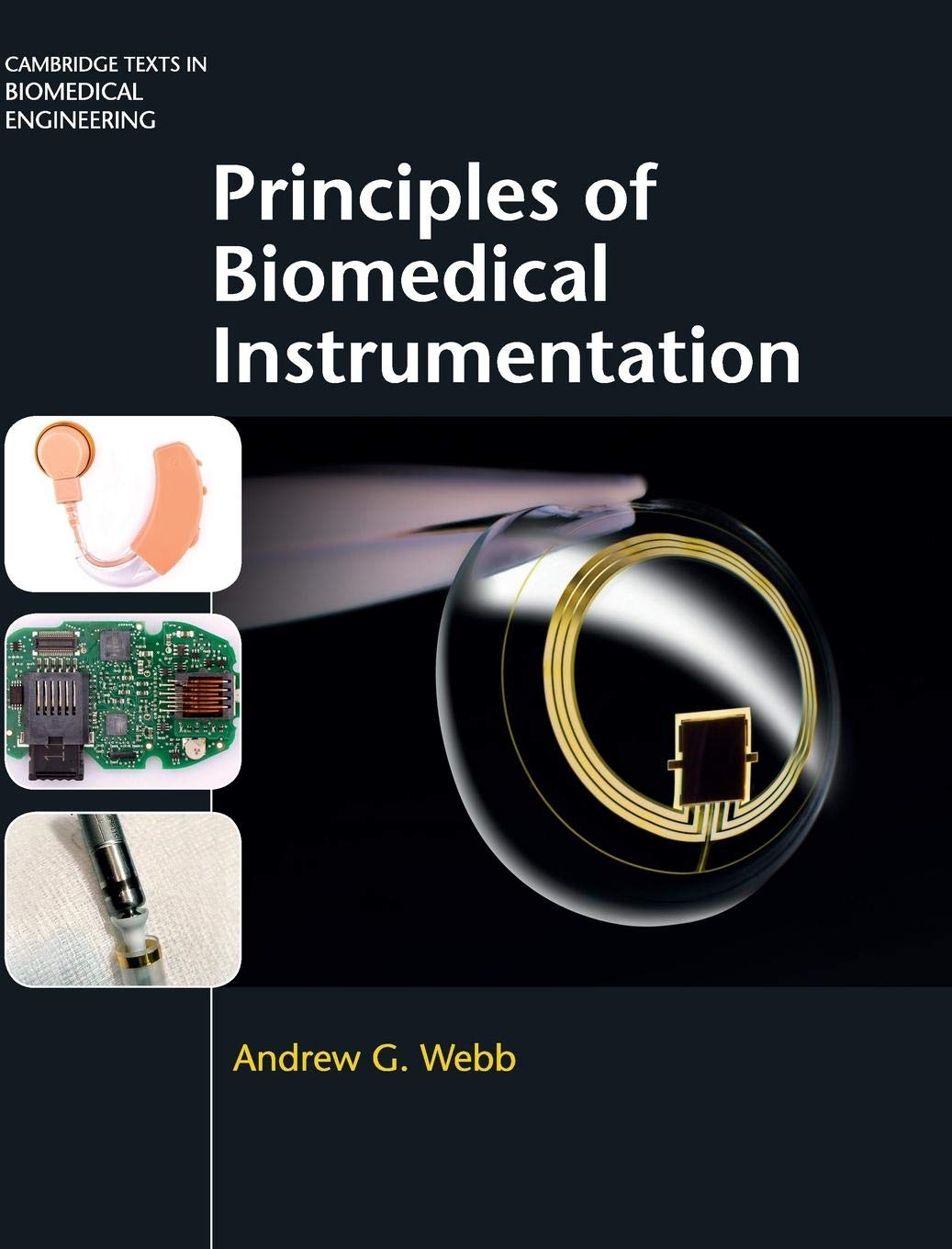
Principles of Biomedical Instrumentation
View on Amazon →
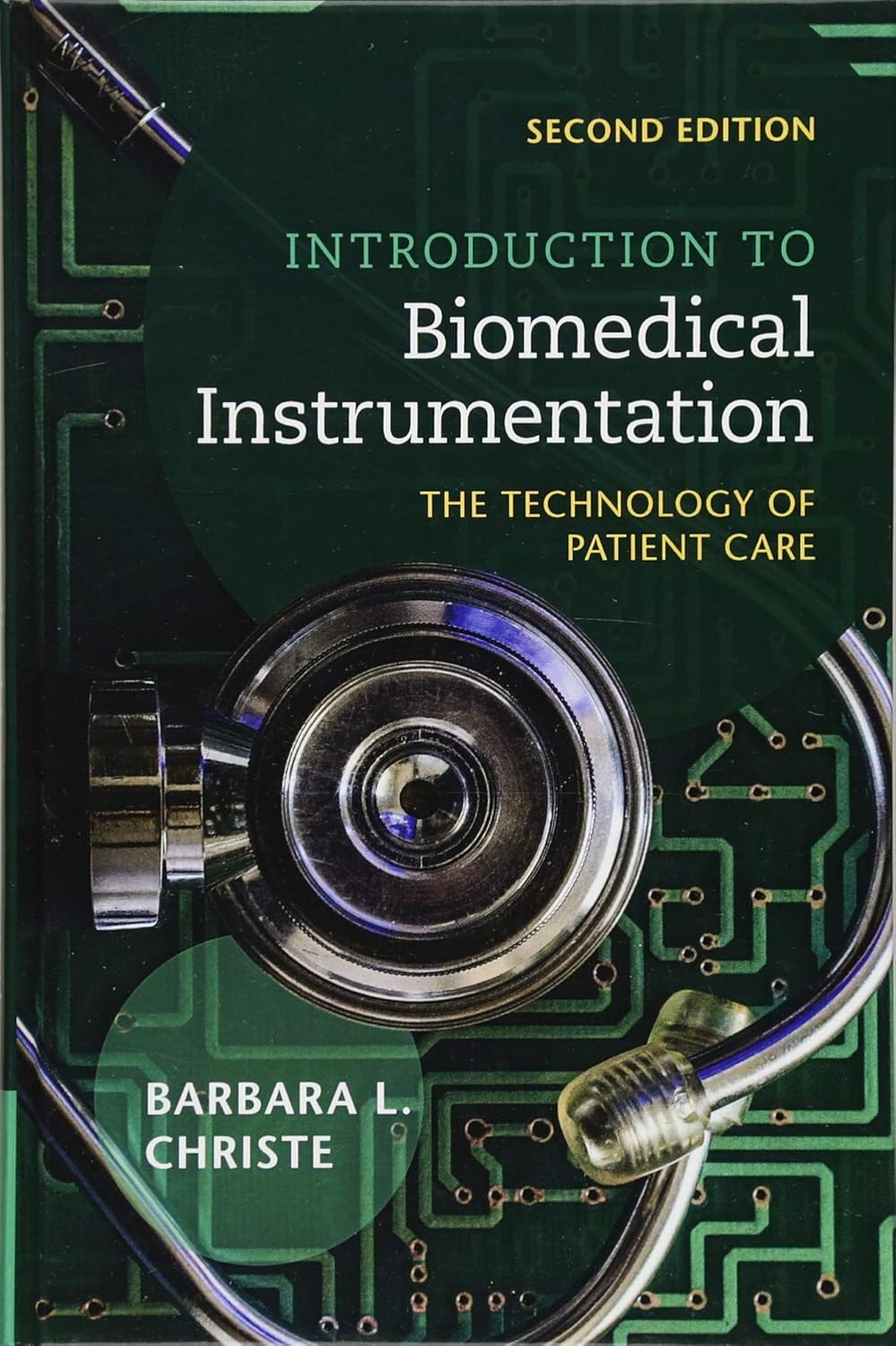
Introduction to Biomedical Instrumentation
View on Amazon →
Maintenance of Medical Technology
View on Amazon →
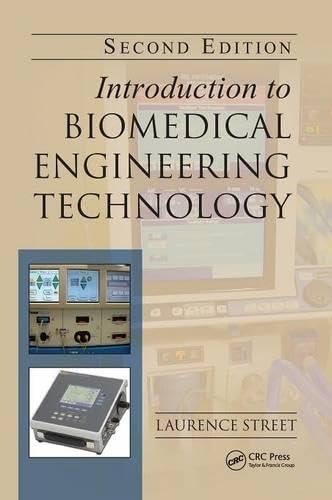
Introduction to Biomedical Engineering Technology
View on Amazon →
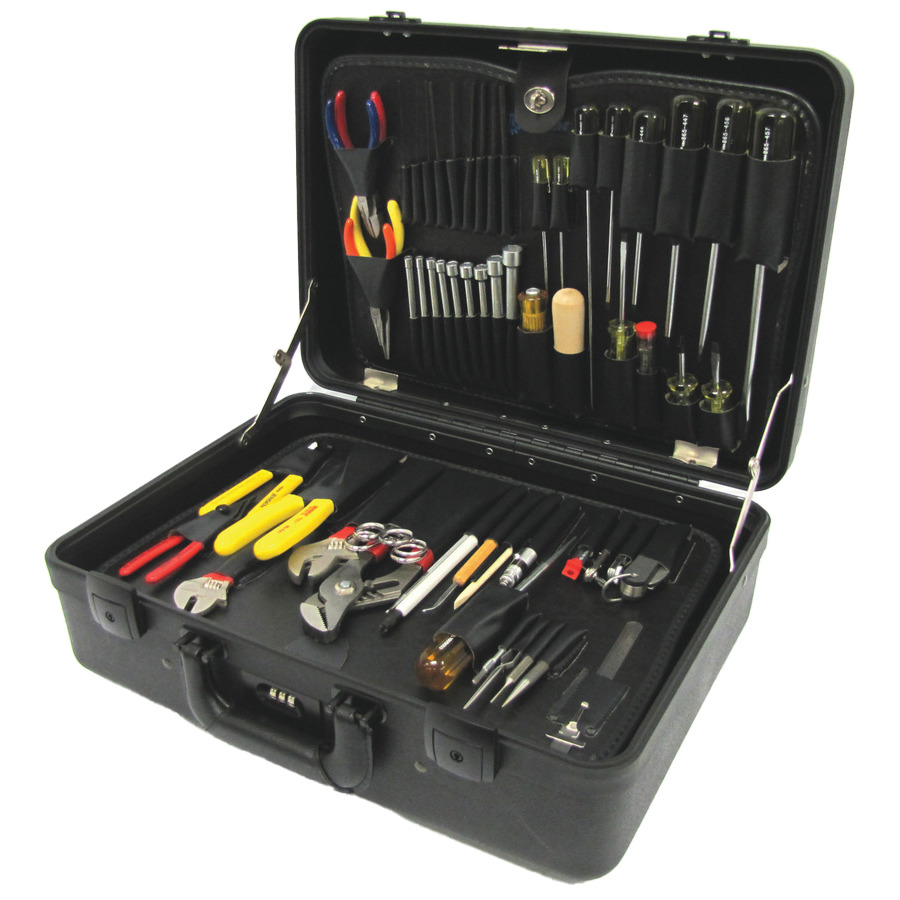
Jensen Biomedical Equipment Maintenance Technician Toolkit
View on Amazon →
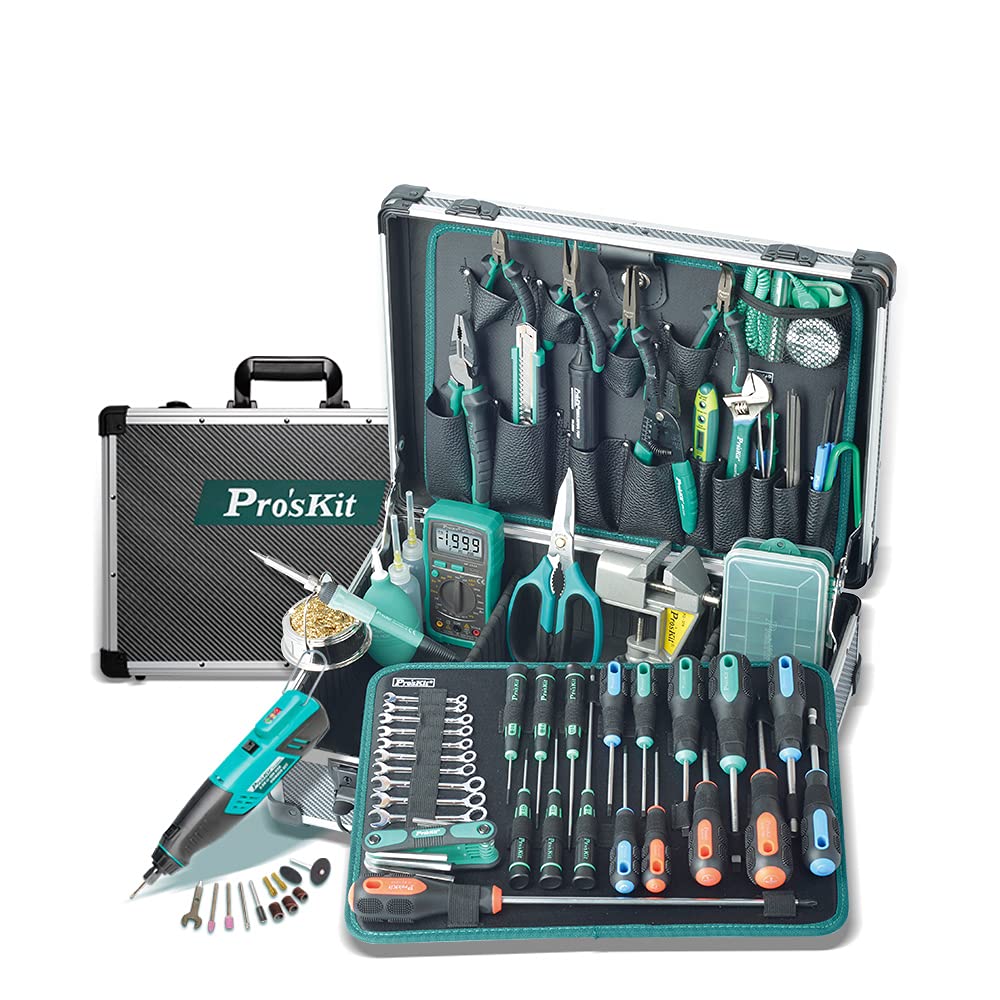
Pro's Kit Electronics Toolkit
View on Amazon →
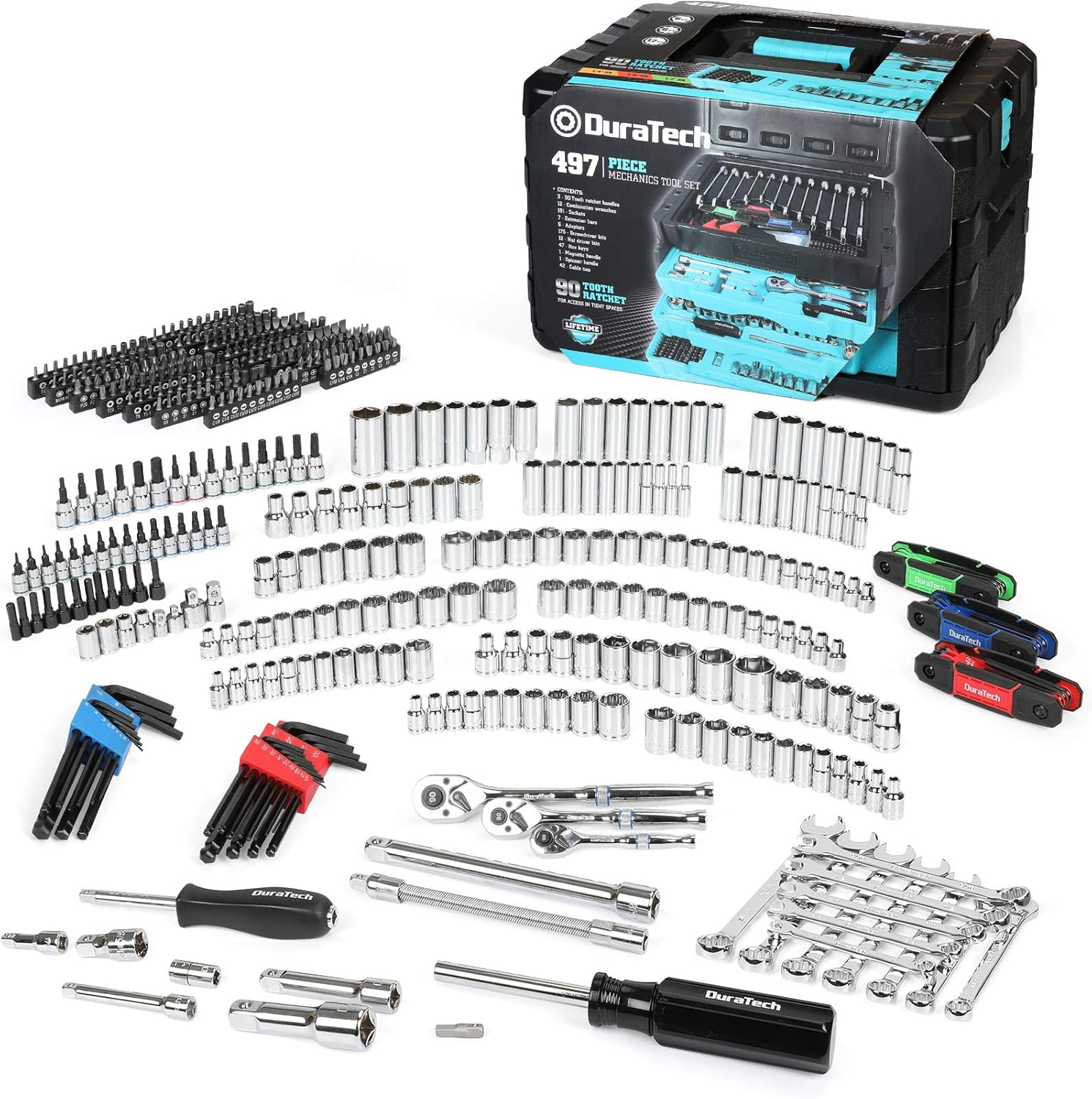
Duratech 497-Piece Mechanics Toolkit
View on Amazon →